
Basement, low garden or annexe below the drain? How pumping stations and sump pumps work, and what pumping station installation in Stockport involves.
- 5.0 Google, 142 reviews
- 9.87/10 Checkatrade, 175 reviews
- Family run, 3,000+ jobs
- Open 24/7
Most drains work by gravity: waste water runs downhill to the sewer. But some properties, or parts of them, sit too low for that to work. A basement, a sunken garden, an annexe at the bottom of a slope or an outbuilding below the level of the drain all need help getting water away. That’s where a pumping station or sump pump comes in. We’ve been installing sumps and pumping stations in Stockport and across Greater Manchester for several years, and thanks to our supplier we can offer competitive prices on every installation.
What is a pumping station?
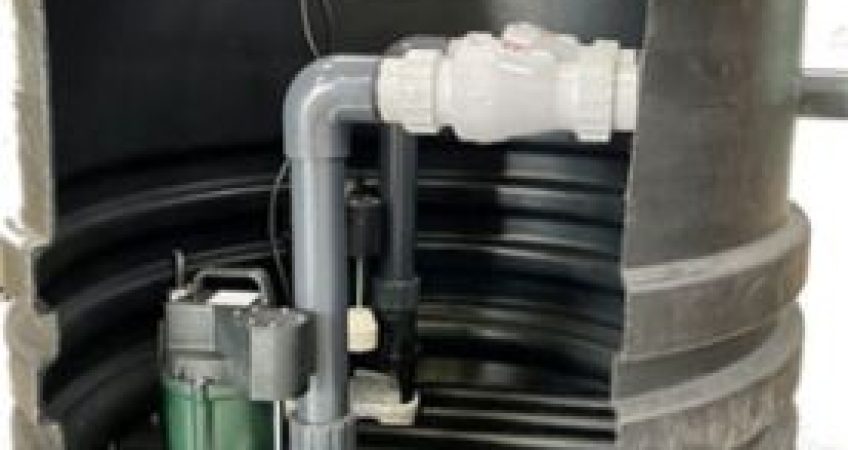
A pumping station is an underground chamber that collects water or waste and automatically pumps it up to a suitable discharge point, such as the main drain, sewer, soakaway or outfall. Inside the chamber is a submersible pump with a float switch. When the level rises, the pump switches on, empties the chamber and switches off again.
Surface water and foul water
Surface water pumping
Used to remove rainwater and groundwater where gravity drainage isn’t possible. Typical uses include:
- Basements and cellars that take on water
- Low-level gardens, patios and courtyards that flood
- Driveways that slope down towards the house or garage
- Land drains that have no lower point to run to
Foul water (sewage) pumping
Used where toilets, showers or kitchens sit below the level of the sewer connection, or are too far away to drain by gravity, such as a basement bathroom, garden annexe or outbuilding. A foul pumping station has a larger chamber and a pump designed to handle sewage.
For a single toilet or shower inside the house, a smaller macerator unit may be enough. See our post on Saniflo installations.
Sump or pumping station: which do you need?
A simple sump pump suits small amounts of clean or surface water, like a damp cellar. A full pumping station is for bigger volumes or foul water. The right choice depends on:
- Where the water comes from and how much there is
- Whether it’s surface water, foul water or both
- How high and how far it has to be pumped
- Where it can legally and practically discharge
- Where the power supply is
Because every site is different, we quote after a site visit so we can design something that works.
Things to plan for
- A high-level alarm so you know if the pump fails before the chamber overflows
- Access to the chamber lid for servicing
- A non-return valve so pumped water doesn’t flow back
- Approvals, as new drainage work, especially foul drainage, may need Building Regulations approval. We’ll talk you through what applies
Looking after a pumping station
- Keep wipes, sanitary products and fat out of a foul system, as they wrap around pumps and floats
- Test the alarm regularly
- Have the pump and chamber checked and cleaned periodically
- Don’t ignore a pump that runs constantly or cycles on and off, as it may be failing or the float may be stuck
Need a pumping station or sump?
Our land drainage and flood prevention page covers pumping stations, land drains and soakaways. See all our services. We work across Greater Manchester, including Stockport, Cheadle and Wilmslow. Call 07375 521027 or WhatsApp us photos of the area and we’ll arrange a visit.
Need It Sorted?
Fixed prices, no surprises. Fixed prices apply Monday to Friday, 9am to 5pm. Evenings, weekends and bank holidays may cost more, and we’ll tell you the rate before we set off. No call-out charge when we carry out the work.
Related Guides
Got a Drain Problem?
Call or WhatsApp us 24/7 on 07375 521027. Send a photo if you can, and we’ll tell you the price before we set off.
The Drain Unblocking Company · 2 St Margaret's Road, Cheadle SK8 2HD · Open 24/7 · Phone or WhatsApp is the quickest way to reach us